End-to-end with SAP: why email automation alone is not enough
Complex service delivery ends in SAP. Only when email, rules and ERP are connected does AI work end to end.
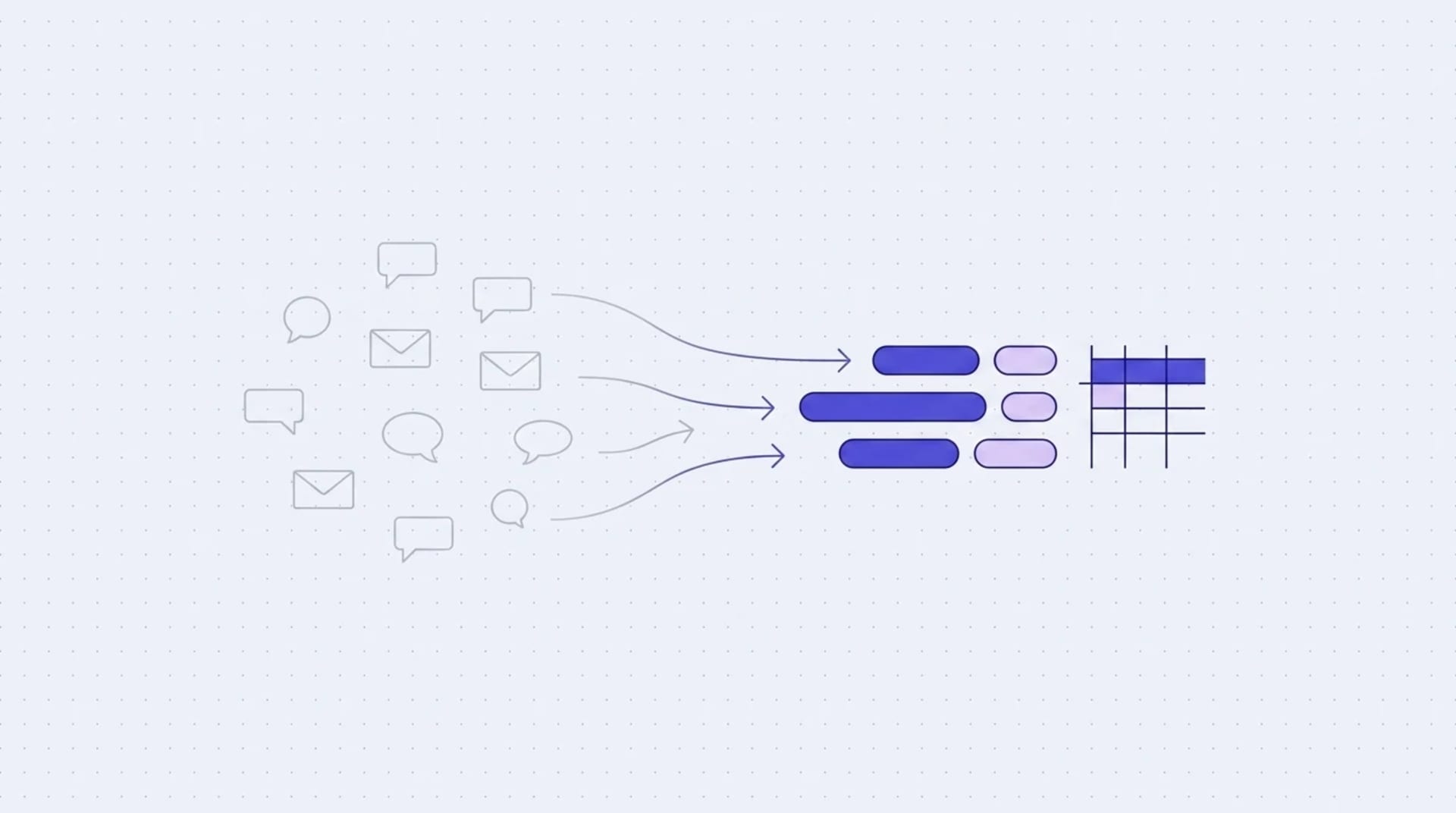
Complex service delivery rarely happens in a single system. The request arrives by email. The details sit in a PDF. A partner reports a change somewhere in a reply chain. A customer needs a confirmation. And at the end, a transaction in SAP has to be right, so the service can be delivered, invoiced or processed further.
One shipment can generate 53 emails. Not because everyone involved works inefficiently, but because logistics is coordination. The team becomes the manual integration layer: it reads, checks, copies, pulls data together and types results into systems.
For more complex service delivery cases, automation without ERP integration is not a pragmatic first step. It is often a dead end. An AI that understands emails but does not work with SAP can write replies. It cannot reliably carry the service to the point where it becomes binding for the business.
A good reply is not a delivered service
Many automation approaches stop at the inbox. They classify a message, suggest a reply or pass information to a team. That can be useful. For simple tasks it is often enough.
In more complex service delivery, the value is not in a well-written email. The value comes when a request becomes a transaction you can check, when data is matched against existing rules, and when the right next action lands in the ERP.
Take an order change. The email can contain new quantities, dates or service requirements. Without a link to the data and rules in SAP, the automation has to guess. It does not reliably know which transaction is meant, which approval is needed or whether the change is allowed at all. Then a person has to search, check and transfer again.
That is not end-to-end automation. It is one more screen in front of the actual work.
The ERP knows the transaction. The communication knows the reason.
SAP and other operational systems are essential. They hold master data, transactions, statuses, approvals and the rules the business runs on. They say what is recorded and binding in the system.
Communication answers a different question: why something has to change. That is where the exception lives, along with the customer requirement, the missing document, the new reference or the piece of information that triggers the next step. Classic systems often do not capture this work cleanly, even though it decides every day whether service delivery works.
That is why you cannot choose between email and ERP. You have to connect them.
Email must not become a new data source next to SAP. And SAP cannot expect unstructured communication to flow correctly into its processes on its own. The job of automation is to turn communication into structured work that can be checked, and to bring it to the point where the business controls it.
End-to-end is a controlled handover
End-to-end does not mean every message runs through without people. With exceptions, approvals and customer-specific rules, that would be exactly the wrong goal.
End-to-end means: the flow does not break between email and ERP.
A robust process follows a clear order:
- An email or document is recognized and assigned to the right workflow.
- The relevant information is extracted and structured.
- The workflow checks it against the SAP context and the company's rules.
- Clear cases are handed to SAP or continued there.
- Unclear, incomplete or non-permitted cases go to a person, with context.
- Every decision and handover stays traceable.
This order solves two problems at once. It takes repeated typing and lookups off the team. And it protects the business from letting uncontrolled AI decisions into core operational processes.
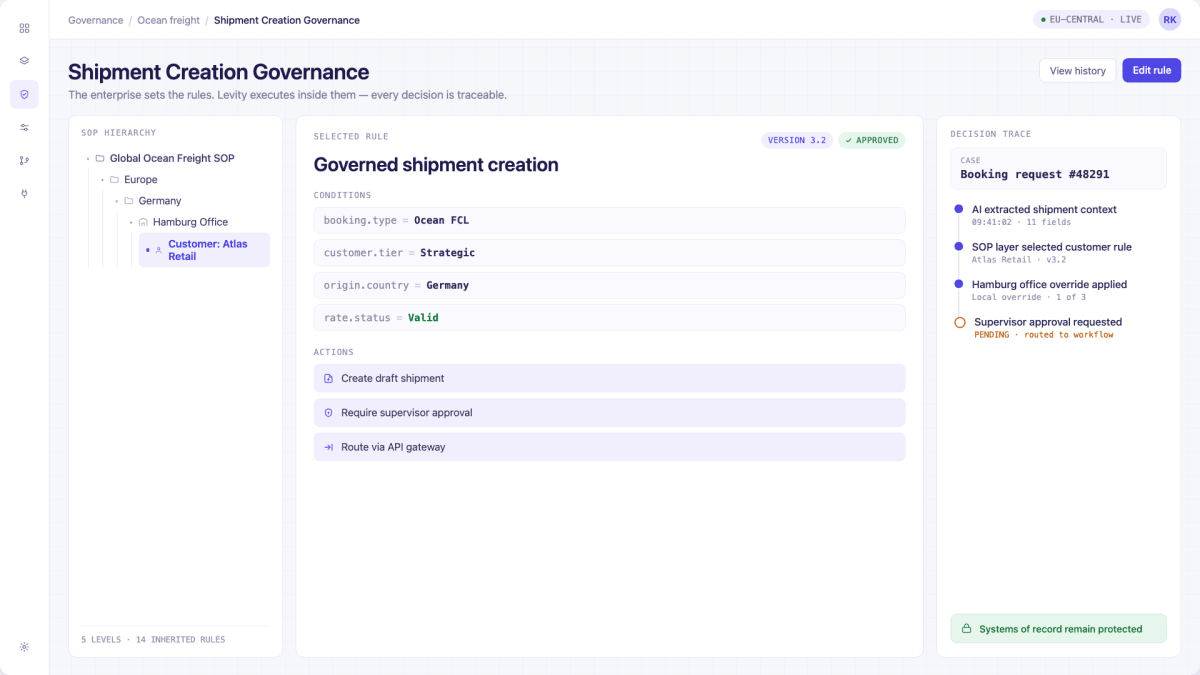
The rules stay with the business. That includes master data, permissions, approvals, service agreements and the question of when a person has to decide. Automation makes those rules executable in the daily flow of communication.
Integration is not a checkbox on the architecture slide
An SAP integration is not done once two systems are technically connected. The decisive work comes first: Which emails belong to which transaction? Which fields are mandatory? Which data may be filled in, and which must come from SAP? What happens when something deviates? Who decides when there is doubt?
That is why a company should not start with an abstract AI initiative or a long list of possible agents. It should pick one concrete, frequent handover point. For example order intake from email and PDF, status and document requests, exception handling, or invoice and surcharge communication.
Then the process is standardized before it is automated. Not to make it theoretically perfect, but so it is clear which decisions are repeatable and which deliberately stay with the team.
This is also the way from pilot to global rollout. A demo prototype can understand an email. An operational workflow has to handle real rules, real exceptions and the existing SAP system.
Where Levity fits
Levity is Communication Intelligence for the global supply chain. It reads the emails, calls and documents your TMS and ERP never capture, standardizes the work, and runs it with AI your team controls.
With SAP, responsibility stays clearly split. Your business owns SAP, the master data, the service and approval rules, and the final say. Levity is the execution layer between unstructured communication and those rules: understanding messages, extracting information, matching transactions, checking data, triggering handovers and routing exceptions to the right person.
Levity does not replace SAP. Levity makes SAP usable where the work still starts in the inbox today and ends in the heads of experienced staff.
Every AI decision stays visible and reversible. When information is missing or a case is not clear, Levity does not pass it on silently. The workflow hands it to your team with context. Human work is not removed. It is focused on the decisions that really need judgment.
The business owns the rules. Levity makes them operational in daily service delivery.
Continue reading
All posts


Experience Levity in action
Explore how large logistics teams move from visibility to reliable automation — all in one platform.